What Does an AI Agent Team Actually Do? A Look Inside Agent Operations
The question we hear most often after a first conversation with a potential client isn’t “can AI help us?”
It’s: “What would it actually do here?”
It’s a fair question — and one that most AI vendors sidestep with abstractions. “AI will transform your operations.” “Your team will be 10x more productive.” “The future of work is agentic.”
None of that answers the question.
So let’s answer it directly. Here’s what AI agent operations looks like inside a real mid-market business — what the agents handle, what they don’t touch, and how the transition from “we’re curious about AI” to “AI is running part of our operations” actually works.
What “Agent Operations” Actually Means
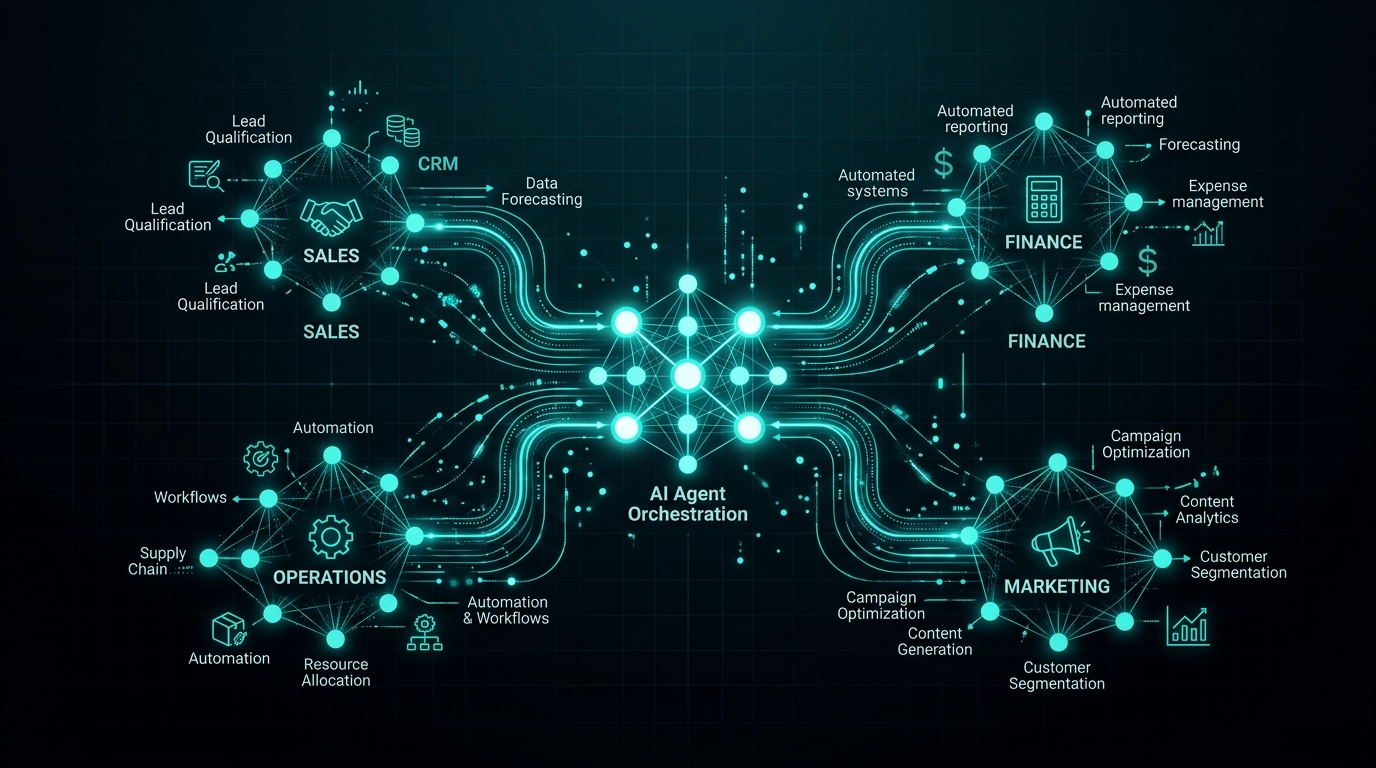
Agent operations is a framework for deploying AI as a persistent operational layer — not a one-time project, and not a chatbot your team can optionally use. It means AI agents are assigned to specific, defined business functions and are running continuously, accountable to measurable outcomes.
This is distinct from most current AI deployments, which are tool-based: your team has access to AI, and they use it when they choose to. Tool-based AI is valuable. But its returns are inconsistent, personal, and largely invisible to the organization. You don’t know if the rep is using it. You can’t measure it. You can’t scale it.
Agent operations treats AI the way you’d treat a staffed function — with defined responsibilities, handoff points, escalation rules, and performance metrics. The agents run whether or not your team thinks to engage them.
What AI Agent Teams Actually Handle
The best-fit use cases for agent operations share common characteristics: they’re repeatable, rules-driven at the execution layer (even if judgment is required elsewhere), they generate or consume structured data, and they currently consume meaningful human time without requiring uniquely human judgment.
Here’s what this looks like across functional areas:
Sales Development
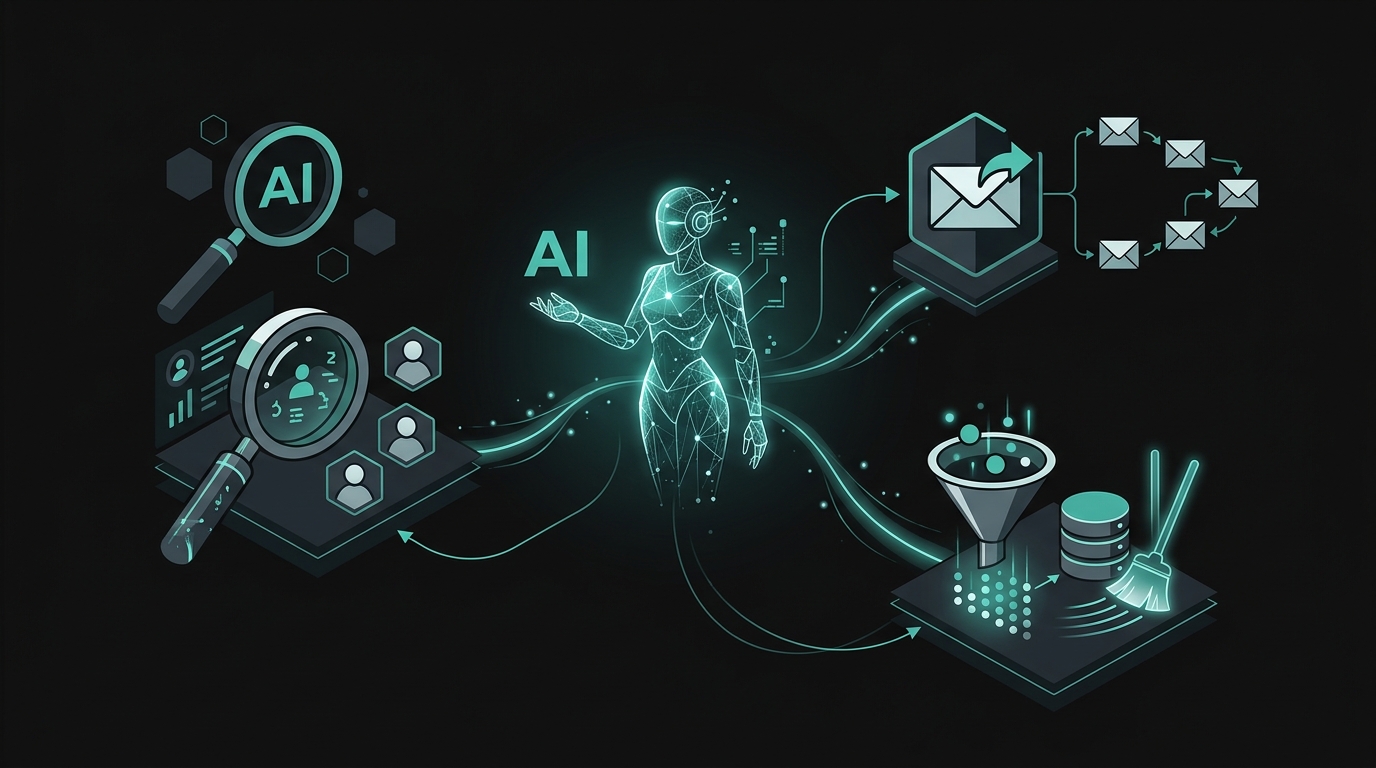
An AI agent operating in sales development handles the top of the funnel — not closing deals, which requires human relationship and judgment, but the execution layer beneath it. This includes:
- Lead research and qualification. The agent pulls in data from LinkedIn, company websites, news sources, and your CRM to build enriched lead profiles. It scores against your ICP criteria and flags the highest-priority targets for your team.
- Outreach sequencing. The agent drafts and sends first-touch outreach across email and LinkedIn, personalizing by vertical, role, and recent trigger event (funding round, leadership change, job posting). It monitors replies and routes warm responses to a human rep within minutes.
- CRM hygiene. The agent updates contact records, logs activity, and flags stale deals — eliminating the administrative overhead that makes your reps hate CRM.
What the agent doesn’t do: have the relationship conversation. Handle objections that require trust or nuance. Close. The human is still in the deal. The agent handles the volume work that precedes and follows each conversation.
Operations Coordination
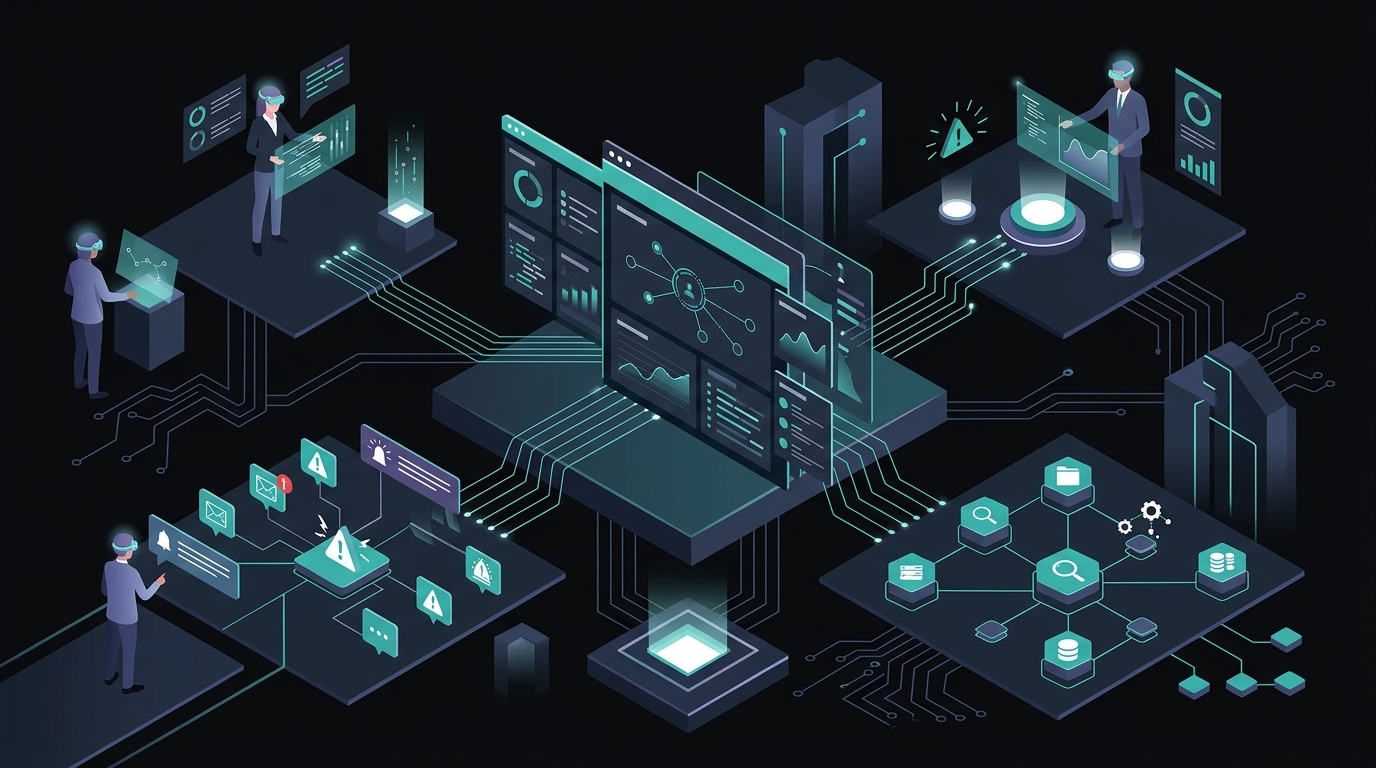
Operations agents take on the coordination layer — the work that keeps things moving but doesn’t require a skilled human to do it manually:
- Project status monitoring. The agent watches your PM tool, identifies tasks that are overdue, blocked, or at risk, and surfaces a daily summary to the relevant stakeholder. No more manual status meetings to find out what you could read in thirty seconds.
- Vendor and contractor management. The agent tracks deliverable deadlines, sends reminder sequences, flags overdue items, and routes escalations when SLAs are missed.
- Internal knowledge retrieval. Instead of your team spending time searching Confluence, Google Drive, or SharePoint, the agent retrieves the relevant doc, policy, or precedent on demand. Your institutional knowledge becomes searchable in natural language.
Finance and Reporting
Finance agents handle the data aggregation and reporting layer:
- Automated reporting packages. The agent pulls from your accounting system, CRM, and operational data, assembles the weekly or monthly reporting package, and distributes it to the right stakeholders — without anyone building a spreadsheet.
- Invoice processing and routing. First-pass invoice review, matching against purchase orders, flagging exceptions for human review, and routing approvals through the correct chain.
- Variance flagging. The agent monitors budget-to-actual and flags material variances before they become surprises at the monthly close.
Marketing and Content
Marketing agents handle execution volume — the consistent output that’s essential but time-consuming:
- Content production pipeline. The agent drafts blog posts, social copy, and email sequences on a defined cadence, drawing from your editorial calendar and brand guidelines. A human reviews and approves. The agent removes the blank-page problem and the production bottleneck.
- Competitive monitoring. The agent watches competitor websites, social, and news sources, summarizes changes weekly, and routes relevant intelligence to the team.
- Campaign performance reporting. The agent pulls ad platform data, assembles the weekly performance digest, and surfaces anomalies (CTR drop, CPC spike, audience fatigue) before budget is wasted.
What AI Agent Teams Don’t Handle
This is as important as what they do handle.
AI agents don’t replace judgment. They don’t handle situations that are novel, ambiguous, or require relationship context that isn’t in the data. They don’t manage people. They don’t negotiate. They don’t make strategic calls.
The value proposition isn’t “AI does the work your team does.” It’s “AI does the execution layer so your team can do the work only humans can do.”
A well-designed agent operation has explicit escalation protocols: the agent runs until it hits a defined edge case, then it routes to a human. That boundary needs to be designed carefully, or the agent either handles things it shouldn’t, or it escalates constantly and becomes more work than it saves.
This is why agent operations is a deployment and operations discipline, not a software purchase. You’re not buying a tool. You’re building a function.
How Agent Operations Gets Built
The deployment sequence matters. Most failed AI implementations try to automate before they understand what they’re automating. Here’s the pattern that works:
1. Process documentation first. Before any AI is involved, document the workflow as it currently exists — inputs, outputs, decision points, exceptions, escalation paths. If you can’t document the process, you can’t automate it. This step often surfaces process problems that have nothing to do with AI.
2. Define the automation boundary. Which parts of the workflow can be agent-handled, and which require human judgment? This isn’t a technology question — it’s a business judgment question. Where does the cost of a wrong decision outweigh the efficiency gain of automation? Map that line explicitly.
3. Build, test, monitor. The agent is built to spec, tested against real workflow data, and monitored for edge case handling and output quality before it’s in full production. Edge cases get surfaced and the escalation logic gets refined.
4. Operate and improve. Once live, agent operations doesn’t stop. The agent needs monitoring, performance tracking, and periodic refinement as the business changes. This is why we stay embedded — not because the technology is fragile, but because your business is dynamic and the agent needs to stay calibrated to it.
The Business Case in Practice
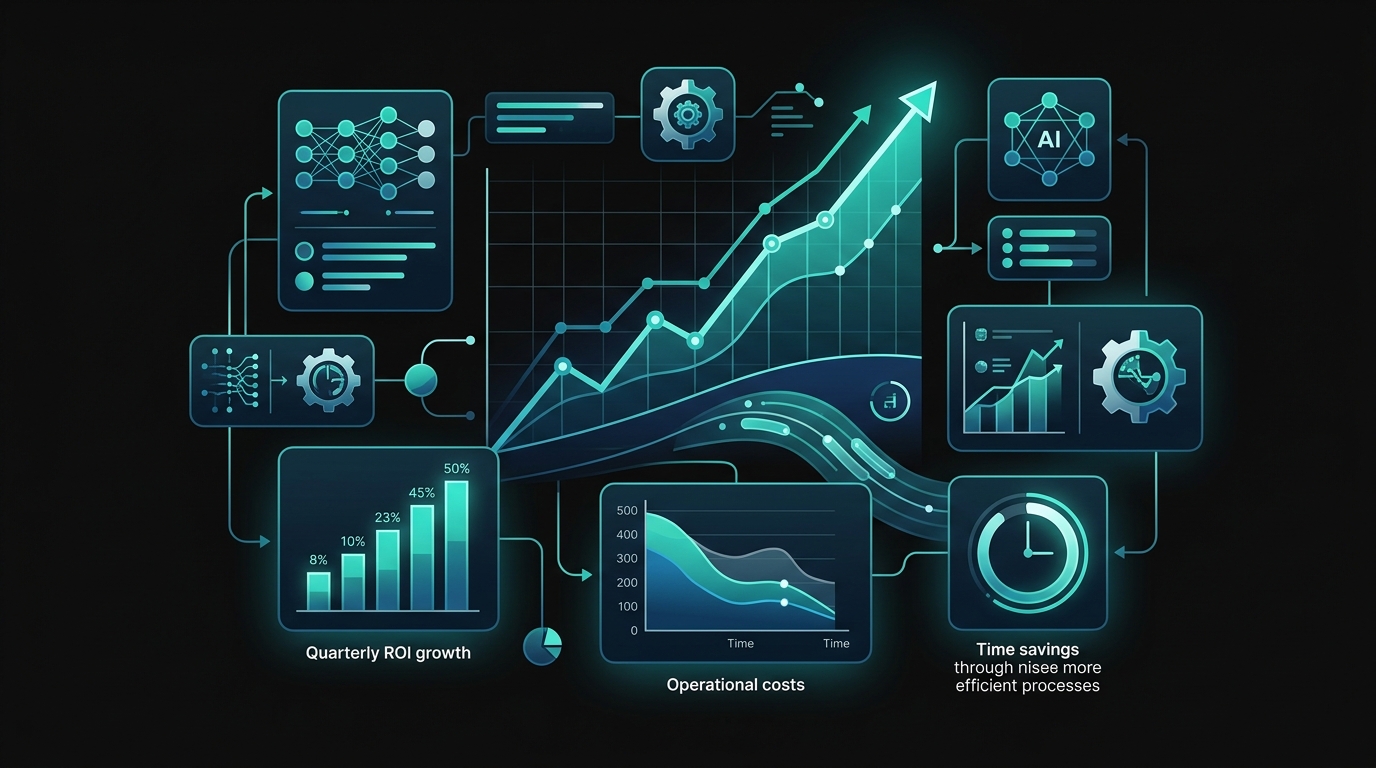
Here’s what the operational math actually looks like, from real deployments (anonymized):
A professional services firm with no dedicated sales function used an agent to run outbound prospecting and pipeline management. Result: four new client engagements in six months, from a team that previously had no capacity to run a structured outreach program.
A nonprofit organization deployed agents across reporting, communications, and donor management workflows. Result: 20 hours per week returned to staff — time that went directly into mission delivery.
A retail business used intelligent automation across procurement and operational workflows. Result: $600,000 in measurable cash flow impact without adding headcount.
In each case, the ROI wasn’t theoretical. It was the outcome of a specific agent handling a specific function — measured against a specific baseline.
The Build vs. Buy Question
This comes up in every engagement: “Why can’t we just use [ChatGPT / Copilot / pick a SaaS tool]?”
You can. Tool-based AI is better than nothing. But there’s a consistent gap between what off-the-shelf AI tools do and what agent operations delivers:
- Off-the-shelf tools require your team to initiate. The tool is available when someone uses it. Agent operations runs whether or not someone initiates.
- Off-the-shelf tools are generic. Your workflow, your data, your escalation rules, your brand voice — none of that is built in. Agent operations is built to your specific operations.
- Off-the-shelf tools don’t integrate. They sit beside your systems. Agent operations integrates into your CRM, PM tool, accounting system, communication stack.
- Off-the-shelf tools aren’t accountable. If the tool isn’t being used, or isn’t producing results, there’s no one accountable for closing that gap. With an embedded deployment partner, there is.
This isn’t an argument against off-the-shelf tools — it’s an argument for knowing which problem you’re solving. If you need to augment individual productivity, tools are fine. If you need to build a function, you need to build it.
Where to Start
The right starting point for most mid-market organizations is a focused readiness assessment — not a broad audit, but an honest answer to: which of your current operational bottlenecks are agent-ready, what would the deployment look like, and what’s the realistic timeline to measurable results?
That’s the work we do first at Zen Aegis. The assessment takes two weeks. It doesn’t produce a deck full of recommendations you’ll never implement. It produces a deployment plan — specific use cases, prioritized by ROI, with a clear path from current state to agent operations in production.
If you’ve been curious about what AI agent teams actually look like inside a business like yours, start with our AI Readiness Assessment. It’s the same starting point we use for every engagement — and it’s the clearest picture of your AI posture you’ll get.
Sources: Zen Aegis client engagement data (anonymized per client agreement); BCG “The Widening AI Value Gap” (September 2025); RSM Middle Market AI Survey 2025 (n=966); McKinsey “State of AI 2025” (November 2025)